


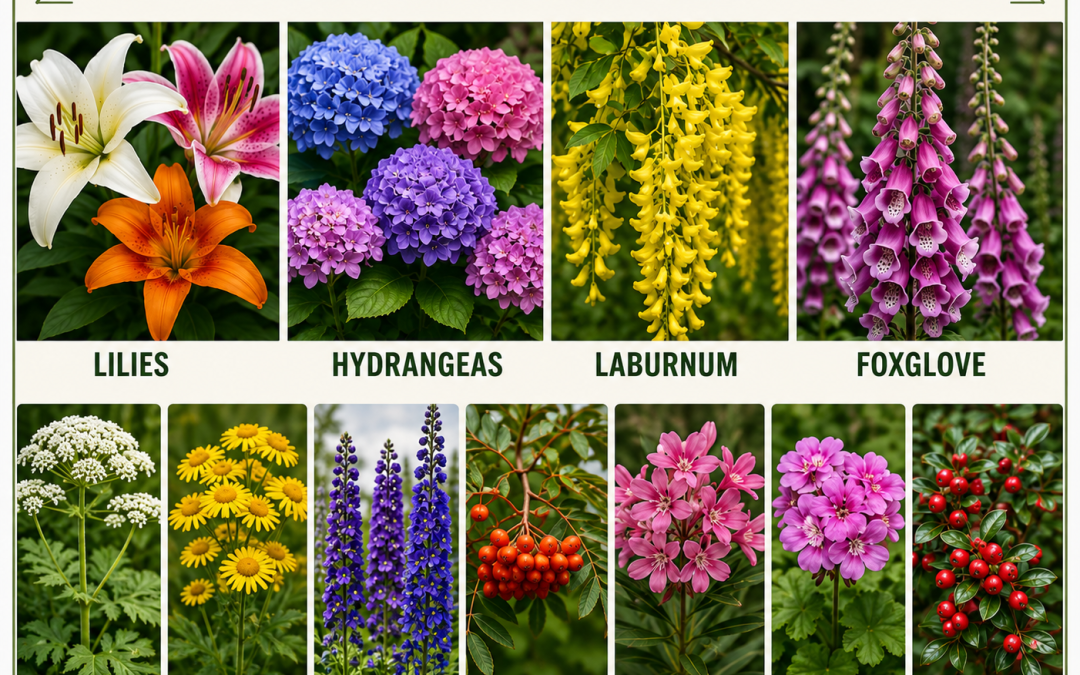
There are many different types of plants founds in the home and garden. Some of these plants contain toxic compounds which can have a detrimental effect on various body organs including the heart, kidneys and the liver. Not all plants are poisonous to pets. Some plants which are toxic to cats may not be toxic to dogs and some plants may be toxic to dogs but not to cats.
Lillies:
The Lilium and Hemerocalis species, are poisonous to cats and can cause kidney failure. All parts of the lily are toxic. Signs of poisoning occur within 1-6 hours and include: drooling, vomiting, loss of appetite, lethargy and weakness. If you think your cat has come into contact with lilies seek veterinary advise immediately. The toxic effects are extremely severe and develop quickly so it essential your cat receives treatment as soon as possible.
Hydrangeas:
All parts of the hydrangea plant contain cyanide – containing compounds. Cyanide reduces the body’s ability to process oxygen at a cellular level which results in clinical signs such as: vomiting, drooling, gasping, collapse, seizures and death.
Laburnum:
This plant can cause gastrointestinal signs and increased heart rate. There is also the risk of tremor, twitching and high temperature.
Foxglove:
All parts of the foxglove plant are poisonous to dogs and cats/ Clinical signs of foxglove poisoning include: nausea, tremors and collapse. There is no antidote for foxglove poisoning therefore supportive therapy is the primary treatment.
Other poisonous summer plants include (but not limited to):
-
Giant Hogweed
-
Ragwort
-
Larkspur
-
Rowan
-
Oleander
-
Geranium
-
Cotoneaster
General advice:
-
If you have a cat do not grow lilies in your home or garden.
-
Remove any lilies from bouquets of flowers and dispose of safely.
-
If your pet is prone to chewing houseplants check if they are toxic and if you are concerned remove from the home.
-
When pruning in the garden try and keep your dog and of the way and remove the cuttings as soon as possible.
If you have any concerns that your pet may have eaten a poisonous plant please seek Veterinary advise immediately:
Connaught House Veterinary Hospital Wolverhampton: 01902 424725
Connaught House Kingswinford: 01384 295949
Connaught House Vets Shifnal: 01952 460781
Out of Hour contact number: 01902 424725
Veterinary Poison Information Service (available 24/7): 02073055055
How to create a Cat friendly garden: https://www.cats.org.uk/help-and-advice/home-and-environment/garden-and-outdoors#garden
How to make a sensory garden for your dog: https://www.battersea.org.uk/pet-advice/dog-advice/sensory-garden